
Steering Wheel Vibration at Speed: Balancing, Brakes or Suspension?

Steering wheel vibration typically results from three root causes: unbalanced or damaged wheels and tires (felt at highway speeds), warped brake rotors (during braking), or worn suspension and steering components (constant or worsening over bumps). Pinpointing which system is responsible depends on when the shaking occurs, at what speed, and under which driving conditions.
When Does the Steering Wheel Shake?
The timing and conditions of the vibration offer the first diagnostic clue. A steering wheel that shakes only at certain speeds points to rotating components—wheels, tires, or driveshafts. Vibrations that appear or intensify during braking suggest brake system faults. Constant shaking that worsens over rough surfaces often indicates suspension or steering wear.
In Dubai's mix of smooth highways and potholed service roads, many drivers first notice steering wheel vibrations on Sheikh Zayed Road around 100–120 km/h, then dismiss them until the problem spreads to lower speeds or braking zones.
Wheel and Tire Issues: The Most Common Culprits
Unbalanced wheels are the leading cause of steering wheel vibration at speed. When a wheel assembly isn't perfectly balanced, centrifugal force amplifies the imbalance as speed increases, transmitting a rhythmic shake through the steering column. This vibration usually starts around 80 km/h and peaks between 100–120 km/h, then may lessen at higher speeds.
Wheel balancing involves attaching small weights to the rim to counteract heavy spots. Over time, these weights fall off—especially on Dubai roads where heat softens adhesive and kerb strikes are common. A single lost weight can trigger noticeable steering wheel shake.
Tire wear patterns also cause vibrations. Cupping (scalloped dips around the tread circumference) creates a rhythmic thump felt in the steering wheel. Flat spots from emergency braking or long-term parking produce similar symptoms. Bulges, separated belts, or out-of-round tires—often accelerated by Dubai's scorching asphalt reaching 70°C in summer—turn smooth rotation into a wobble.
- Unbalanced wheels: vibration increases with speed, peaks around 100–120 km/h
- Cupped or unevenly worn tires: rhythmic shake, often accompanied by road noise
- Tire damage (bulge, separation): severe vibration, may worsen suddenly
- Bent wheel rim: constant vibration at all speeds, worsens with speed
Bent rims from pothole impacts are another frequent issue. Even a minor bend that's invisible to the naked eye disrupts rotation and balance. Alloy wheels can crack internally without obvious external damage, particularly on low-profile performance tires common on European sports and luxury cars.
Quick check: rotate your front wheels to the rear. If the vibration moves to the seat or floor rather than the steering wheel, the problem is wheel- or tire-related. Professional tire services include dynamic balancing on computerized machines and visual plus tactile inspection for damage.
Brake System Faults: Vibration During Braking
If your steering wheel shakes or pulsates only when you press the brake pedal—especially during moderate to hard braking from highway speeds—warped front brake rotors are the likely cause. Brake rotors are steel or composite discs clamped by brake pads to slow the vehicle. Excessive heat causes the rotor surface to become uneven, creating high and low spots.
When the brake pads contact these uneven surfaces, the caliper pistons push back in a pulsing rhythm, transmitting vibration through the steering and suspension into the steering wheel. This is distinct from the constant-speed vibration caused by wheel imbalance.
Dubai driving accelerates rotor warping. Stop-start traffic, aggressive braking, and then parking immediately afterward (trapping heat) all contribute. Washing a car with cold water immediately after spirited driving can thermally shock rotors. European performance vehicles with large brakes and sticky pads generate tremendous heat, making rotor maintenance critical.
Rear brake issues typically cause vibration felt in the seat or chassis rather than the steering wheel, because the front wheels—connected directly to the steering system—dominate steering feedback.
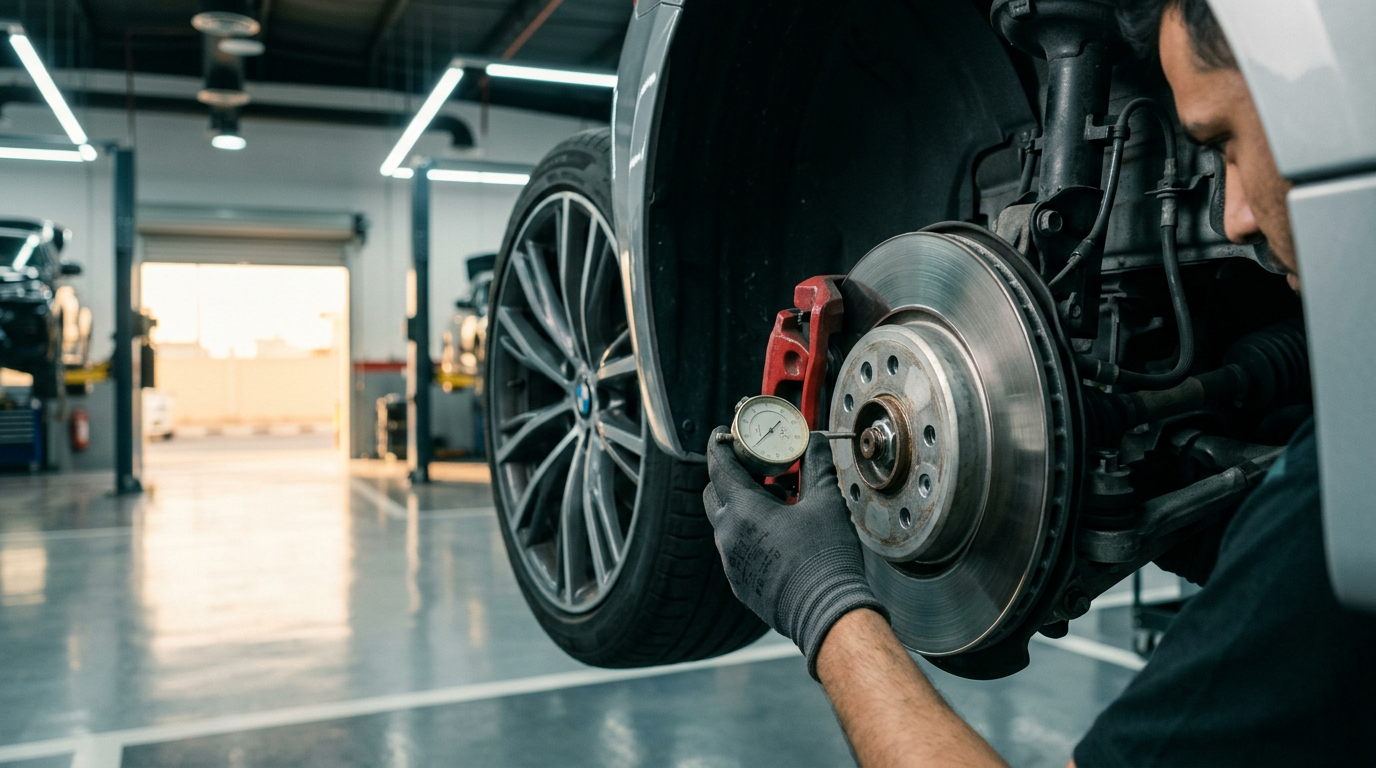
Warped rotors require machining (resurfacing) if thickness permits, or replacement. Many modern rotors are too thin to machine safely and must be replaced. Comprehensive brake services measure rotor runout (wobble) with a dial gauge and thickness with a micrometer. If you're experiencing brake vibration alongside squealing or grinding, read our guide on what your brakes are telling you.
Suspension and Steering Component Wear
Worn suspension and steering parts introduce play and looseness that manifest as steering wheel shake, particularly over bumps or uneven surfaces. Unlike wheel imbalance (speed-dependent) or warped rotors (braking-dependent), suspension-related vibrations are often present at all speeds and worsen on rough roads.
Key components that cause steering wheel vibration when worn:
- Wheel bearings: produce a humming noise that changes with speed, plus vibration and steering wander
- Tie rod ends: create loose, vague steering feel and vibration during direction changes
- Control arm bushings: allow excessive wheel movement, causing shimmy and vibration over bumps
- Ball joints: introduce play in the suspension geometry, felt as clunking and vibration
- Steering rack mounts: when worn, allow the rack to shift, transmitting vibration directly into the steering wheel
Wheel bearings are a common culprit in pre-owned European cars, especially those that have covered significant mileage in Dubai heat and dust. A failing bearing allows the wheel hub to wobble slightly, which amplifies into noticeable steering wheel shake at speed. The vibration may lessen when cornering in one direction as weight shifts off the bad bearing.
Dubai's roads—smooth highways interrupted by speed bumps, construction zones, and occasional deep potholes—stress suspension components. Bushings dry out and crack in extreme heat. Dust infiltrates bearing seals. What might last 100,000 km in temperate climates can fail at 60,000 km here.
Professional suspension and steering diagnostics involve lifting the vehicle and manually checking for play in each joint and bearing. Worn parts must be replaced; there's no adjustment or temporary fix. If you're considering a used vehicle, a thorough pre-purchase inspection will identify worn suspension components before you buy.
Wheel Alignment and Its Role
Incorrect wheel alignment doesn't usually cause steering wheel vibration on its own, but it accelerates the tire wear that does. Misalignment causes tires to scrub rather than roll cleanly, creating cupping and uneven wear patterns. These irregular surfaces then generate vibration.
Alignment also affects how suspension forces are transmitted. A car with severe toe or camber misalignment may develop a steering wheel shake because the tires are fighting each other, especially at highway speeds. After hitting a large pothole or kerb—common in Dubai—alignment should be checked alongside wheel balance.
Proper alignment settings are especially critical for European performance and sports vehicles with low-profile tires and stiff suspension. A BMW or Porsche will telegraph tire and alignment issues through the steering wheel far more readily than a softly sprung SUV.
Diagnosing the Source: A Logical Approach
Start with the simplest and most common causes. Check tire pressures—under-inflation causes flexing and heat buildup that can mimic balance issues. Visually inspect tires for bulges, cuts, uneven wear, or embedded objects. Look at wheel rims for bends or cracks.
Next, note exactly when the vibration occurs:
- Only at 80–120 km/h, smooth when slower or faster: wheel balance or tire issue
- Only during braking, worse from high speed: warped front brake rotors
- Constant, worsens over bumps or rough roads: suspension or steering wear
- Accompanied by pulling to one side: alignment, uneven tire wear, or brake drag
Test drive on a smooth, straight road at various speeds. If the vibration is speed-dependent, try rotating the front wheels to the rear. If safe to do so, brake gently from 80 km/h and note whether the vibration appears or intensifies.
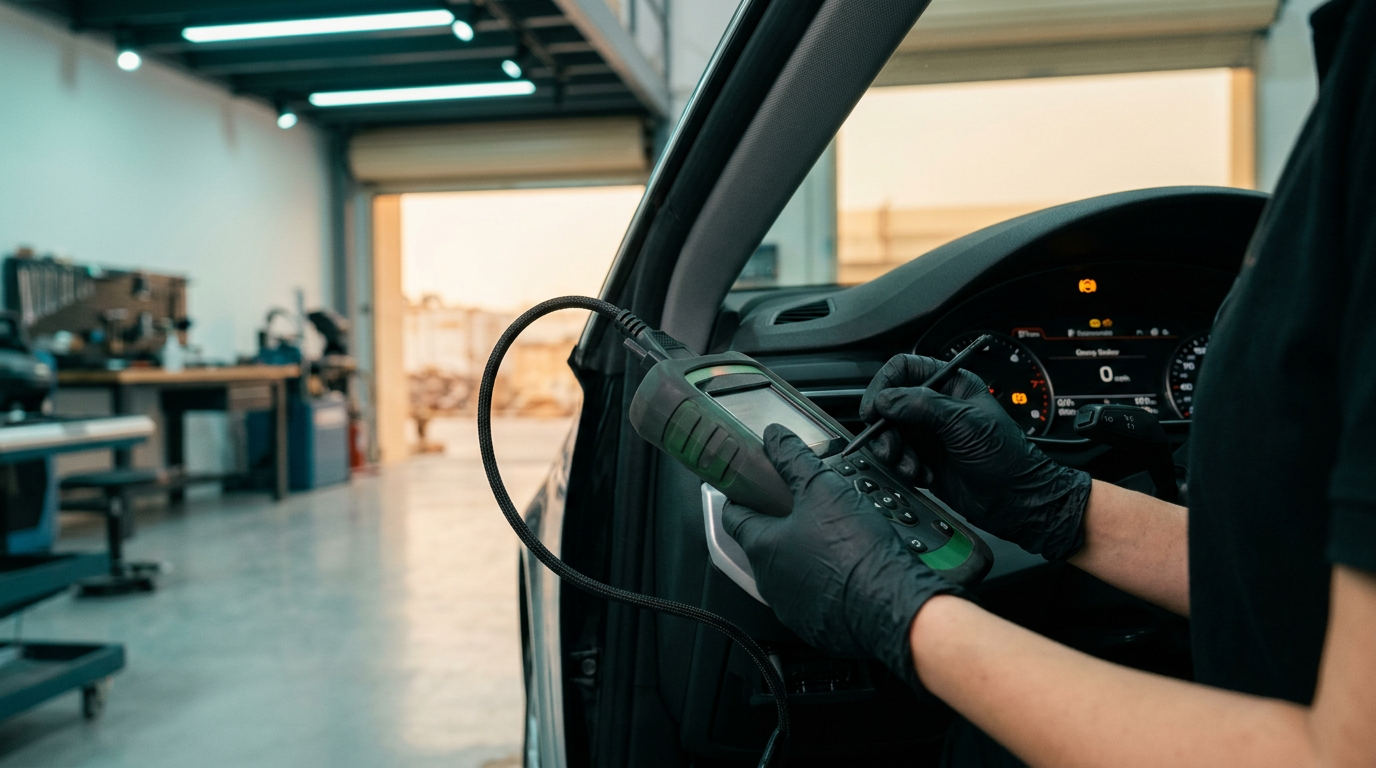
Advanced diagnostics require lifting the vehicle. A technician will spin each wheel by hand to check for wobble, measure brake rotor runout, and physically test suspension joints for play. Manufacturer-grade diagnostic equipment can log wheel speed sensor data that reveals bearing issues or ABS faults contributing to vibration.
Why Dubai Conditions Accelerate These Problems
Dubai's environment is uniquely harsh on the systems that cause steering wheel vibration. Asphalt temperatures exceeding 70°C in summer soften tire compounds and accelerate tread wear. Wheel balance weights lose adhesive grip. Brake rotors endure extreme thermal cycling—hot from traffic, then cooled by air conditioning in underground parking.
Fine sand acts as an abrasive, infiltrating wheel bearing seals and suspension joints. Humidity near the coast promotes corrosion in brake components and suspension hardware. Short city trips prevent brakes from reaching optimal operating temperature, leaving moisture and contaminants on rotor surfaces that promote uneven wear.
European vehicles—engineered for temperate climates and autobahn cruising—require more frequent inspection of these wear items in the UAE. A Mercedes-Benz, Audi, or Range Rover may need brake fluid changes, wheel balancing, and suspension checks more often than the standard service schedule suggests. Refer to our article on how Dubai heat shortens component life for more context.
When to Seek Professional Help
Steering wheel vibration is more than an annoyance—it's a symptom of wear or damage that will worsen and potentially compromise safety. Ignoring it leads to accelerated tire wear, further suspension damage, and reduced braking performance.
Seek professional diagnosis if the vibration is severe, appears suddenly, worsens rapidly, or is accompanied by noise, pulling, or changes in steering feel. Any vibration during braking should be inspected promptly, as brake system faults directly affect your ability to stop safely.
Independent specialists with experience in European and performance vehicles understand the tighter tolerances and more communicative steering systems in brands like Porsche, BMW, and Audi. They'll differentiate between normal feedback and genuine faults, using the correct diagnostic procedures and OEM-equivalent parts.
Related reading: Steering Wheel Play and Knocking: Rack, Column or Joints.
Steering Wheel Vibration? We'll Find the Cause
JAD Garage in Al Quoz 4 uses manufacturer-grade diagnostic equipment to pinpoint wheel, brake, and suspension issues causing steering vibration. Call +971 56 355 6113 or visit us Monday to Saturday, 09:00–19:00, for expert European and EV car service in Dubai.
Frequently asked questions