Battery Registration/Coding on BMW, Audi and Mercedes: Why It Matters

Modern BMW, Audi and Mercedes-Benz vehicles require electronic battery registration (also called coding or programming) after every car battery replacement. This software process tells the engine control unit (ECU) that a new battery has been installed, resets the charging algorithm, and prevents alternator overcharging that shortens battery life and can damage electrical components. Skipping registration may not trigger immediate failure, but it accelerates battery degradation and can cause voltage regulation problems.
What Battery Registration Actually Does
European manufacturers introduced intelligent battery management in the mid-2000s to support start-stop systems, regenerative braking, and the growing electrical load from infotainment, driver assistance and climate systems. The ECU continuously monitors battery age, charge cycles, temperature and state of health, then adjusts alternator output accordingly.
When you replace a car battery without registration, the ECU still believes the old, aged battery is installed. It applies a gentler charging profile designed for a battery nearing end-of-life. A new battery can accept—and needs—higher charge current to reach full capacity quickly. Without registration, the new battery remains partially charged, sulfation begins on the plates, and you may see a check engine light or electrical faults within months.
In Dubai's heat, where ambient temperatures hit 50°C and under-bonnet temperatures exceed 70°C, a partially charged battery degrades even faster. The chemical reactions that cause sulfation and grid corrosion accelerate with temperature, so the margin for error is much smaller than in temperate climates.
Which Models Require Battery Coding
Battery registration is mandatory on:
- BMW: All models from approximately 2002 onward (E65 7 Series introduced the system; widespread from E90 3 Series, E60 5 Series, and all F, G and newer chassis codes)
- Audi: Models from roughly 2005 onward with start-stop or convenience electrical systems (A4 B7, A6 C6 and newer, Q7, Q5, A3 8P and all newer platforms)
- Mercedes-Benz: W221 S-Class, W204 C-Class, W212 E-Class and all newer models; also Sprinter vans and AMG variants
- Porsche: Cayenne (955, 957, 958, 9Y0), Panamera, Macan, and 991/992 generation 911
- Volkswagen: Touareg, Passat B6/B7/B8, Golf Mk6 and newer with start-stop
If your vehicle has an auto start-stop button on the dashboard or mentions start-stop in the owner manual, battery registration is required. Some earlier models without start-stop also use intelligent charging and benefit from registration, even if the system is less strict.
The Registration Process: What Happens
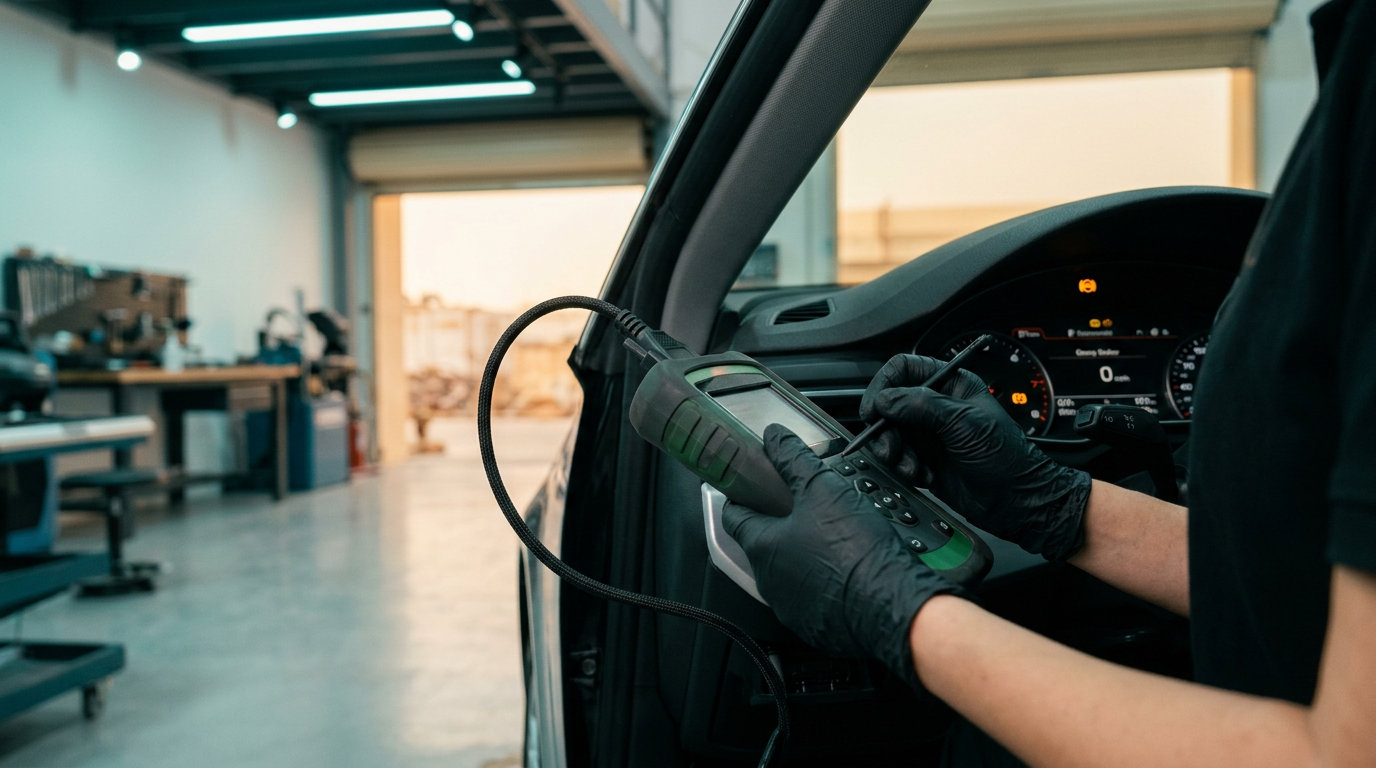
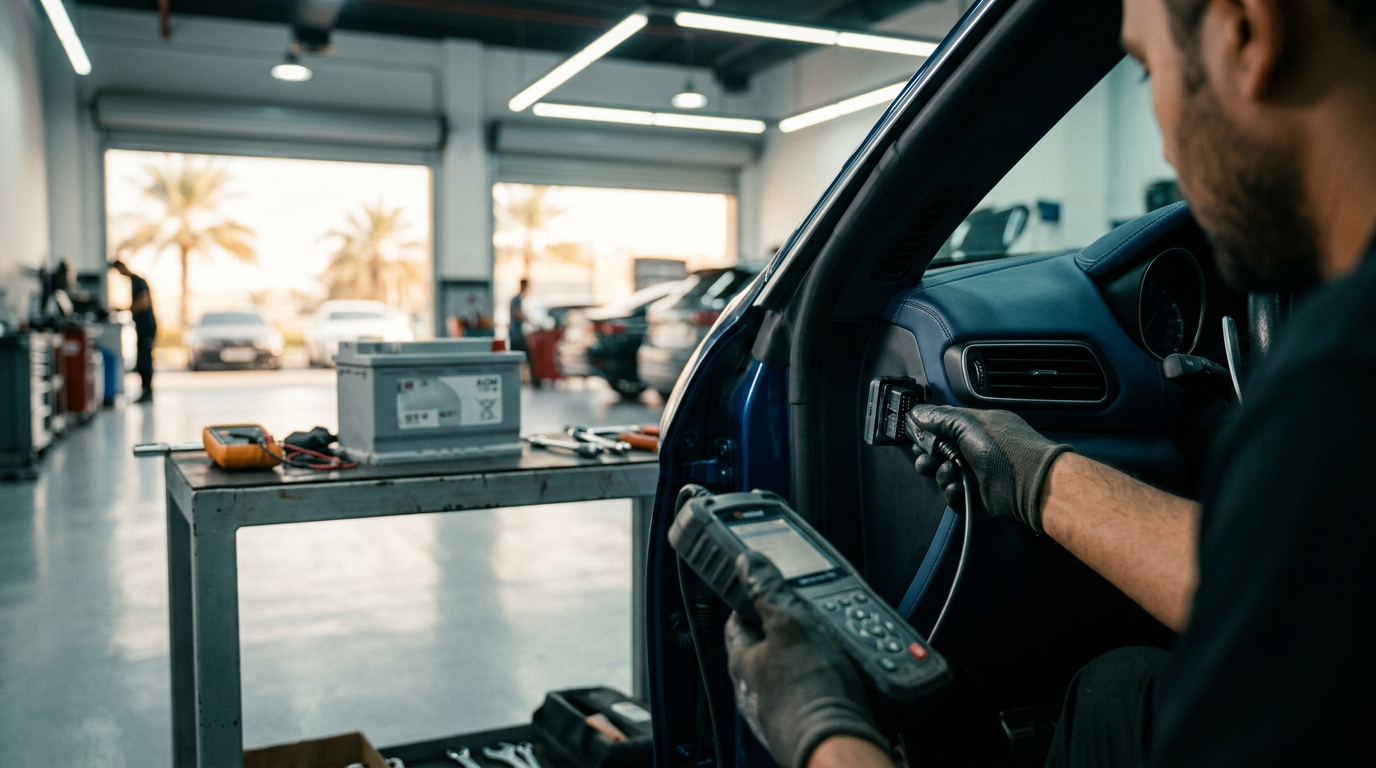
Battery coding is performed through the OBD-II port using manufacturer-grade diagnostic equipment. The technician enters the new battery's specifications—capacity (Ah), technology (AGM, EFB or flooded), and part number—into the vehicle's ECU. The system then:
- Resets the battery age counter and charge cycle log
- Adjusts the alternator's voltage regulator to the new battery's chemistry and capacity
- Recalibrates start-stop thresholds and regenerative braking parameters (if equipped)
- Clears any stored battery-related fault codes
The process takes 5 to 15 minutes. On BMW, the procedure is called "battery registration" and accessed through ISTA diagnostic software. Audi and Volkswagen Group vehicles use ODIS or VCDS, and the function is labelled "battery replacement" or "battery adaptation." Mercedes-Benz requires Xentry or DTS Monaco, with the function under "Service / Maintenance" menus.
Some generic OBD scanners claim battery coding capability, but they often lack the full parameter set or fail to write correctly to the ECU. Using the wrong tool can leave partial data and trigger fault codes. Professional workshops invest in brand-specific diagnostic platforms or multi-brand systems with genuine OEM protocols.
AGM vs EFB vs Standard Flooded Batteries
Modern European vehicles typically specify AGM (Absorbent Glass Mat) or EFB (Enhanced Flooded Battery) technology. AGM batteries are sealed, spill-proof, handle deep discharge cycles better, and are mandatory for most start-stop systems. EFB batteries are an intermediate step—better than standard flooded but not as robust as AGM. Standard flooded batteries are found in older or base-spec models without start-stop.
You must replace like-for-like chemistry. Installing a standard flooded battery in a vehicle designed for AGM will cause early failure because the charging profile is different. The ECU needs to know which chemistry is installed so it can set the correct voltage ceiling and charge acceptance rate. This information is entered during battery registration.
What Happens If You Skip Registration
The car will start and drive. You won't see an immediate breakdown. But within weeks or months, you may notice:
- Battery warning light or check engine light
- Start-stop system disabled or erratic operation
- Reduced battery life—new batteries failing in 12-18 months instead of 3-4 years
- Electrical glitches: flickering interior lights, radio resets, or sluggish window operation
- Difficulty starting after the vehicle sits for a few days, especially in Dubai's heat
In some cases, the alternator continues to overcharge the new battery, boiling off electrolyte (in flooded types) or causing internal pressure buildup (in AGM). Overcharging also stresses the voltage regulator and can shorten alternator lifespan. When you later diagnose whether you need a battery or an alternator, both components may test faulty—a costly mistake that proper registration would have prevented.
Cost Breakdown for Battery Replacement With Registration in Dubai
A complete car battery replacement on a BMW, Audi or Mercedes involves the battery itself, labour for installation, and the registration/coding procedure. Here are typical market ranges in Dubai as of 2025:
| Component | Typical Dubai Market Range (AED) | Notes |
|---|---|---|
| AGM Battery (70-90 Ah) | 600 – 1,200 | Brands: Bosch, Varta, Amaron. OEM-spec or premium aftermarket. See battery brand comparison. |
| Labour (remove, install, test) | 100 – 250 | 10-30 minutes depending on battery location (boot, under seat, engine bay). |
| Battery Registration/Coding | 150 – 400 | Requires OEM or equivalent diagnostic tool. 10-15 minutes. |
| Total | 850 – 1,850 | Varies by vehicle model, battery size, and workshop equipment. |
High-performance and larger vehicles (BMW X5, Audi Q7, Mercedes-Benz S-Class, Porsche Cayenne) often use larger AGM batteries (90-110 Ah) that push the upper end of the range. Some models have the battery in difficult locations—under the rear seat, in the boot under the floor, or even in the wheel arch—adding labour time.
Mobile battery replacement services are popular in Dubai, but many mobile operators lack the diagnostic equipment to perform proper registration. They replace the battery and leave, which means you're back to the problems described above. Always confirm that coding is included in any quote. If you're comparing at-home vs garage battery replacement, remember that registration is non-negotiable on these brands.
DIY Battery Replacement: Possible but Incomplete
Physically swapping a car battery is straightforward—disconnect the negative terminal first, then positive, remove hold-down brackets, lift out the old battery, install the new one, reconnect positive then negative, and check that all electrical systems power up. Many owners ask whether they can change a battery themselves in a modern European car.
The answer is yes for the mechanical part, but you still need a workshop visit for registration. Consumer-grade OBD scanners (even higher-end Bluetooth units) rarely support the full battery coding function. Enthusiast tools like Carly or BimmerLink offer limited registration on some models, but they don't always write all parameters correctly, and you risk leaving the ECU in a half-configured state.
If you replace the battery yourself to save on labour, budget for a separate visit to a garage with the correct diagnostic equipment to complete the registration. Some workshops charge a standalone coding fee (typically 150-300 AED) if you supply your own battery, though policies vary.
Why This Matters More in Dubai
Dubai's climate is brutal on car batteries. Extreme heat accelerates the electrochemical reactions inside the battery, increasing self-discharge rates and accelerating plate corrosion. A battery that might last five years in Europe often fails in three years here—or less if the charging system isn't optimised.
Short-trip city driving, common in Dubai traffic, means the alternator has less time to fully recharge the battery between starts. Start-stop systems add dozens of extra charge-discharge cycles per day. If the ECU isn't managing charge acceptance properly because registration was skipped, the battery spends more time in a partial state of charge, which is the worst condition for longevity.
Many drivers experience a dead battery after leaving the car parked at the airport for a week or two. If the battery wasn't registered, it may have been chronically undercharged, and the parasitic drain from alarm, telematics and comfort systems is enough to flatten it. Proper registration ensures the battery reaches full charge during normal driving, giving you the reserve capacity to handle short trips and occasional longer sits without needing a jump start.
How to Ensure Proper Registration
When you book a battery replacement, ask the workshop directly:
- "Do you perform battery registration/coding for [your vehicle brand]?"
- "What diagnostic equipment do you use?" (Look for ISTA, ODIS, Xentry, or reputable third-party platforms like Autel or Launch with OEM-level access.)
- "Is registration included in the quoted price, or is it an additional charge?"
A professional independent workshop will include registration as standard on any BMW, Audi or Mercedes battery job. If the answer is vague or the workshop suggests it's optional, that's a red flag. You can also check your vehicle's service history or diagnostic report after the job to confirm that battery adaptation was performed and no fault codes remain.
For luxury car service or sports car maintenance, choose a garage that invests in up-to-date diagnostic tools and trains technicians on European vehicle electronics. Battery replacement is a routine job, but doing it correctly on a modern German car requires more than a spanner and a voltmeter.
Other Electrical Services That May Be Needed
If your battery has been struggling, it's worth checking the broader electrical and electronics system. An ageing alternator, corroded battery terminals, or parasitic drain from a faulty module can all mimic or contribute to battery problems. A proper diagnostic scan will reveal charging system voltage, current draw at rest, and any stored fault codes in the comfort, infotainment or body control modules.
Some vehicles also require ECU programming or module updates if battery-related faults have been logged for an extended period. After registration, the workshop should clear all fault codes and perform a test drive to confirm that start-stop, regenerative braking, and all electrical consumers operate normally.
Battery Replacement With Proper Registration in Al Quoz
JAD Garage in Al Quoz 4 uses manufacturer-grade diagnostic equipment to register and code batteries on BMW, Audi, Mercedes-Benz and all European brands. Call +971 56 355 6113 or WhatsApp to book your battery service with proper ECU programming included.
Frequently asked questions