Budgeting Car Maintenance in Dubai: Monthly Reserve by Segment


Monthly car maintenance budgets in Dubai vary widely by segment: compact sedans typically require AED 150–300/month, mid-size SUVs AED 300–500, luxury cars AED 500–900, sports cars AED 700–1,200, supercars AED 1,500–3,000, and EVs AED 100–250. These reserves cover scheduled maintenance, fluids, brake pads, tires, and predictable wear items—not collision repair or unexpected failures.
Why Dubai Driving Demands a Monthly Reserve
Dubai's climate and traffic patterns accelerate vehicle wear. Ambient temperatures reach 50°C in summer, cabin air conditioning runs almost year-round, and fine sand infiltrates air filters and brake dust shields. Stop-start traffic between Sheikh Zayed Road and residential areas stresses automatic transmissions and brake systems. Short city trips prevent engines from reaching full operating temperature, leaving moisture in oil and exhaust systems. A monthly reserve smooths the cost of these predictable, recurring services rather than facing a surprise AED 2,000 bill at each service interval.
How to Calculate Your Monthly Reserve
Start with your owner manual service schedule. Most European manufacturers specify intervals in kilometres or time—whichever comes first. In Dubai's heat, time often triggers service before the odometer does, especially for cars driven less than 15,000 km per year. List every scheduled service over 24 months: oil changes, air filter replacement, brake fluid exchange, coolant fluid exchange, spark plugs, and any transfer case fluid or differential services for all-wheel-drive models. Add typical brake pad life (30,000–50,000 km for sedans, 20,000–35,000 km for performance cars) and tire replacement (40,000–60,000 km, shorter in Dubai heat). Divide the total by 24 to find your monthly figure.
Essential Items in Every Calculation
- Engine oil and filter: every 10,000 km or 12 months for most European cars, every 5,000–7,500 km for turbocharged performance engines or severe-duty use
- Cabin and engine air filters: every 15,000–20,000 km in Dubai due to fine sand; check every oil change visit
- Brake fluid: every 24 months (hygroscopic fluid absorbs moisture, lowering boiling point in UAE humidity)
- Coolant: every 60,000–100,000 km or 5 years, depending on formulation (long-life vs conventional)
- Brake pads and rotors: highly variable by driving style; inspect every service
- Tires: rotate every 10,000 km, replace when tread depth reaches 3 mm (legal minimum 1.6 mm, but unsafe in rain)
- Battery: 2–4 years in UAE heat; test annually after 18 months (see Signs Your Car Battery Is Dying in UAE Heat)
Monthly Reserve by Vehicle Segment
The table below shows typical Dubai market ranges for monthly maintenance reserves. Figures assume 15,000 km annual driving, manufacturer-recommended service intervals, OEM or premium alternative parts, and labour rates at independent European specialists. Luxury and performance segments use higher-grade fluids, larger brake components, and more frequent inspections.
| Segment | Examples | Monthly Reserve (AED) | Key Cost Drivers |
|---|---|---|---|
| Compact Sedan / Hatchback | Volkswagen Golf, Peugeot 208, Renault Megane | 150–300 | 4–5 litres engine oil, smaller brake pads, modest tire sizes |
| Mid-Size Sedan / SUV | Audi A4, BMW X3, Mercedes-Benz GLC | 300–500 | 6–7 litres synthetic oil, larger brake rotors, all-wheel-drive fluid services |
| Luxury Sedan / SUV | BMW 7 Series, Mercedes-Benz S-Class, Range Rover | 500–900 | Complex air suspension, advanced electronics, premium tire sizes (see Mercedes AIRMATIC guide) |
| Sports Car | Porsche 911, BMW M3, Audi RS5 | 700–1,200 | High-performance brake pads, track-capable tires, frequent fluid changes, dual-clutch transmission services (see Porsche PDK guide) |
| Supercar / Exotic | Ferrari, Lamborghini, McLaren | 1,500–3,000 | Carbon-ceramic brakes, bespoke tire compounds, annual major inspections, specialist labour (see Maserati cost guide) |
| Electric Vehicle | Polestar 2, MG ZS EV, Tesla Model 3 | 100–250 | No oil changes, cabin filter, brake fluid, tire rotation, coolant for battery thermal management, 12V battery (see EV service checklist) |
Special Considerations for EVs
Electric vehicles eliminate engine oil changes, spark plugs, fuel filters, and most exhaust system work. Regenerative braking extends brake pad life to 80,000–100,000 km in many cases. However, EVs still require cabin air filter replacement (often every 12 months in Dubai dust), brake fluid exchange every 24 months, tire rotation every 10,000 km, and coolant service for battery thermal management systems (typically 4–6 years or 100,000 km). Tire wear can be accelerated by instant torque and battery weight. The 12-volt auxiliary battery often needs replacement every 3–4 years. Monthly reserves for EVs are lower overall, but not zero. Learn more in EV Brakes and Tyres: Why They Wear Differently.
When to Adjust Your Reserve
Increase your monthly figure if you drive more than 20,000 km per year, frequently tow, track your car, or own a model known for higher wear rates. Reduce it slightly if you drive under 10,000 km annually, though time-based service intervals still apply. After the first 24 months, review actual spending: if you consistently underspend, lower the reserve; if repair shop invoices exceed your budget, raise it. Keep a simple spreadsheet or note in your phone with every service date, odometer reading, and cost to track trends over time.
Car Maintenance Checklist for Monthly Planning
Use this checklist to help ensure you capture all recurring costs when setting your reserve:
- Check engine oil level and condition between services (every 1,000 km for older engines, monthly for newer models)
- Inspect tire tread depth and pressure (adjust for load and temperature; check every two weeks)
- Test all exterior and interior lights; replace bulbs before RTA inspection
- Listen for unusual brake noise or vibration; early pad replacement avoids rotor damage
- Monitor coolant level in expansion tank; top up only when engine is cold
- Check power steering fluid (hydraulic systems) or scan for electric power steering faults
- Inspect wiper blades for tearing; replace before summer rains
- Review service history and owner manual for upcoming interval services
- Book appointments early at your chosen repair shop to avoid peak-season delays
How Independent Specialists Help Keep Costs Predictable
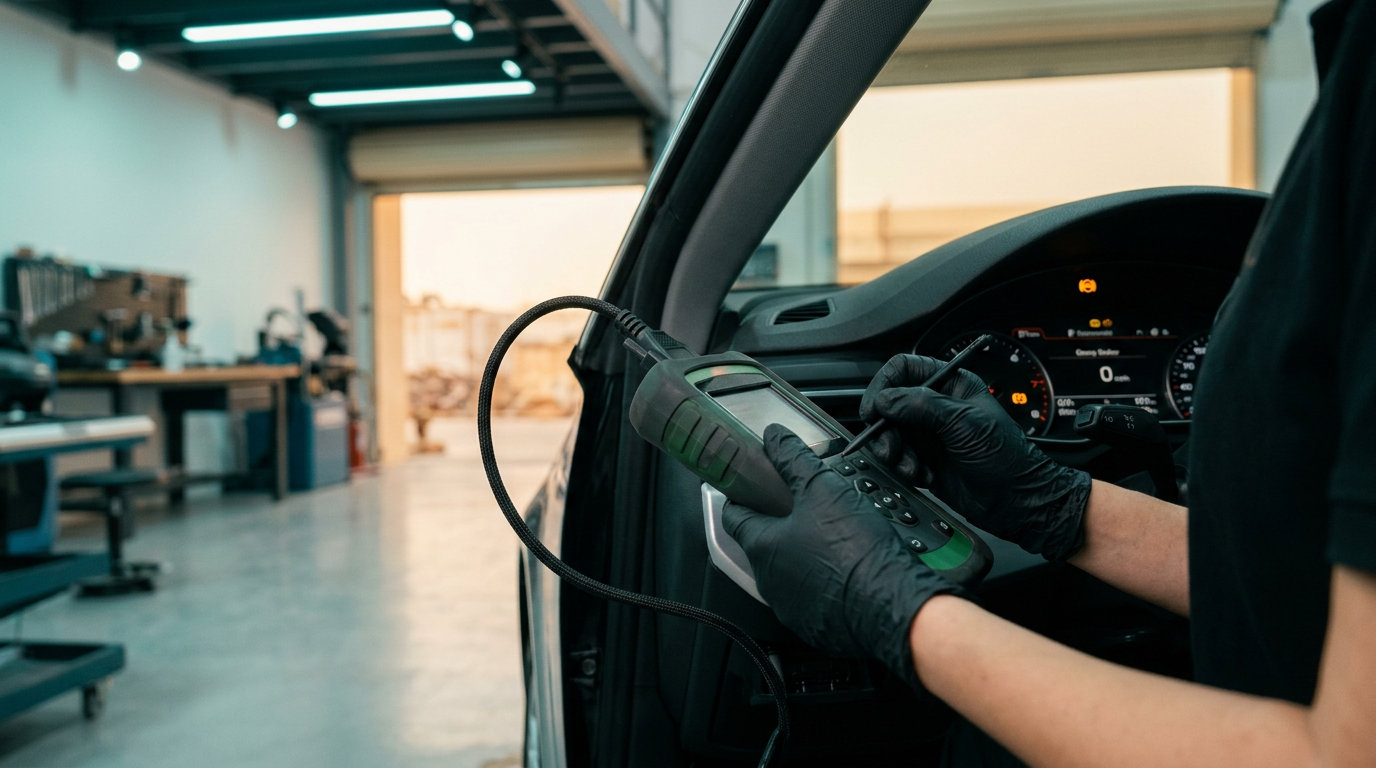
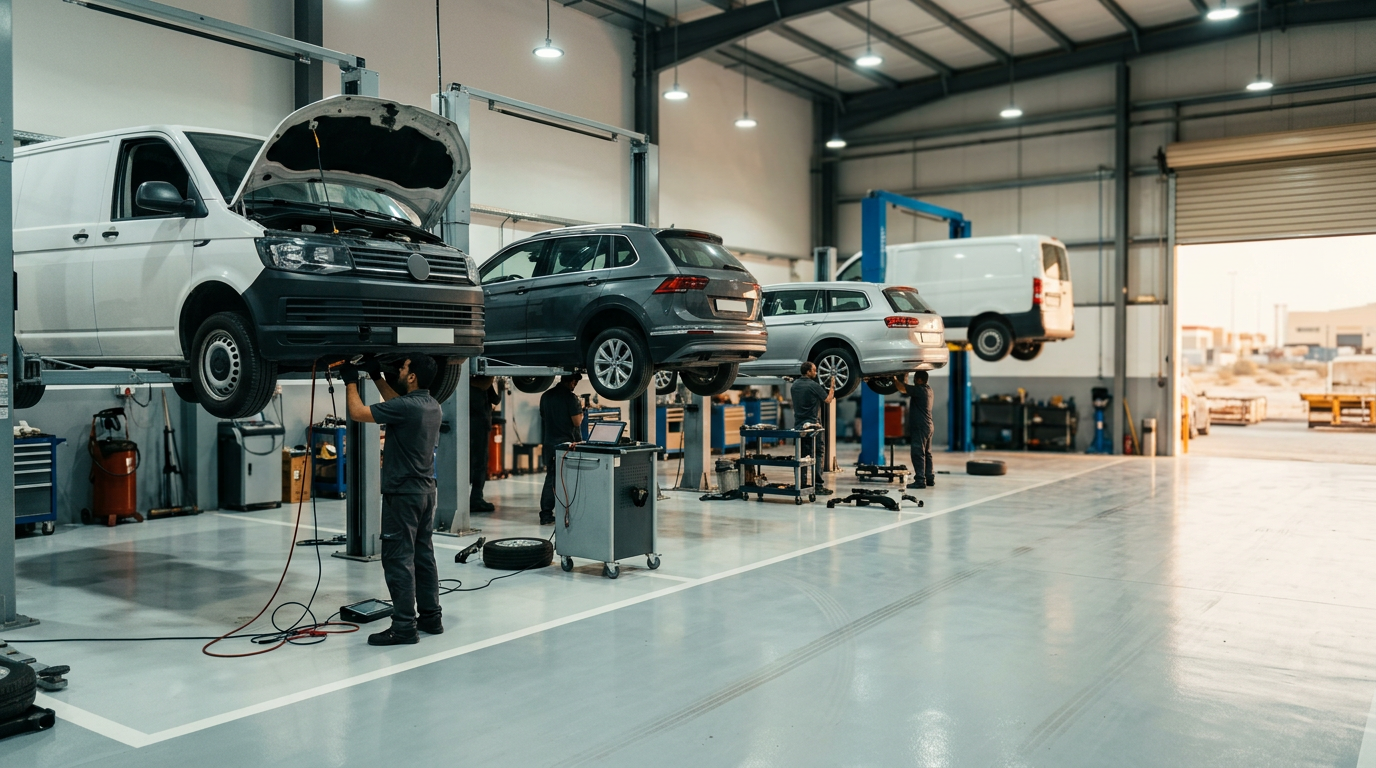
Independent European and EV specialists in Dubai offer transparent pricing, manufacturer-grade diagnostic equipment, and access to OEM and premium alternative parts. They follow the same service intervals and procedures outlined in your owner manual, without the overhead of showroom facilities. For fleet or corporate accounts, many shops provide fixed-price service packages that make monthly budgeting even simpler. Always request an itemised estimate before authorising work, and keep digital or paper records of every visit to help ensure continuity and resale value.
What Your Reserve Does Not Cover
Monthly maintenance reserves are for predictable, scheduled work. They do not cover collision repair, bodywork and paint, windscreen replacement, RTA fines, insurance premiums, or unexpected component failures like alternator or water pump replacement. For older or high-mileage vehicles, consider a separate emergency fund of AED 3,000–5,000 to cover unplanned repairs. Pre-purchase inspection before buying a used car can reveal deferred maintenance and help you adjust your reserve accordingly (see How to Read a UAE Car Service History).
Practical Steps to Start Today
Open your owner manual to the maintenance schedule section—usually near the back or in a separate service booklet. Note the next three due services by date and kilometre. Search online for typical Dubai market costs for each item (oil change, brake pads, air filter, etc.) and add them up. Divide by the number of months until the third service. Round up by 15–20 percent to account for parts price fluctuations and unexpected wear. Set up a dedicated savings account or monthly transfer so the funds are available when you visit your repair shop. This simple habit removes financial stress and keeps your vehicle safe and reliable in Dubai's demanding environment.
Plan Your Maintenance Budget with Expert Guidance
JAD Garage in Al Quoz 4 provides transparent, itemised service estimates for all European and EV models, helping you budget accurately and avoid surprises. Call +971 56 355 6113 or visit us Monday to Saturday, 09:00–19:00, to discuss your vehicle's service schedule and real-world costs.
Frequently asked questions