
Jaguar Maintenance Guide for UAE Owners

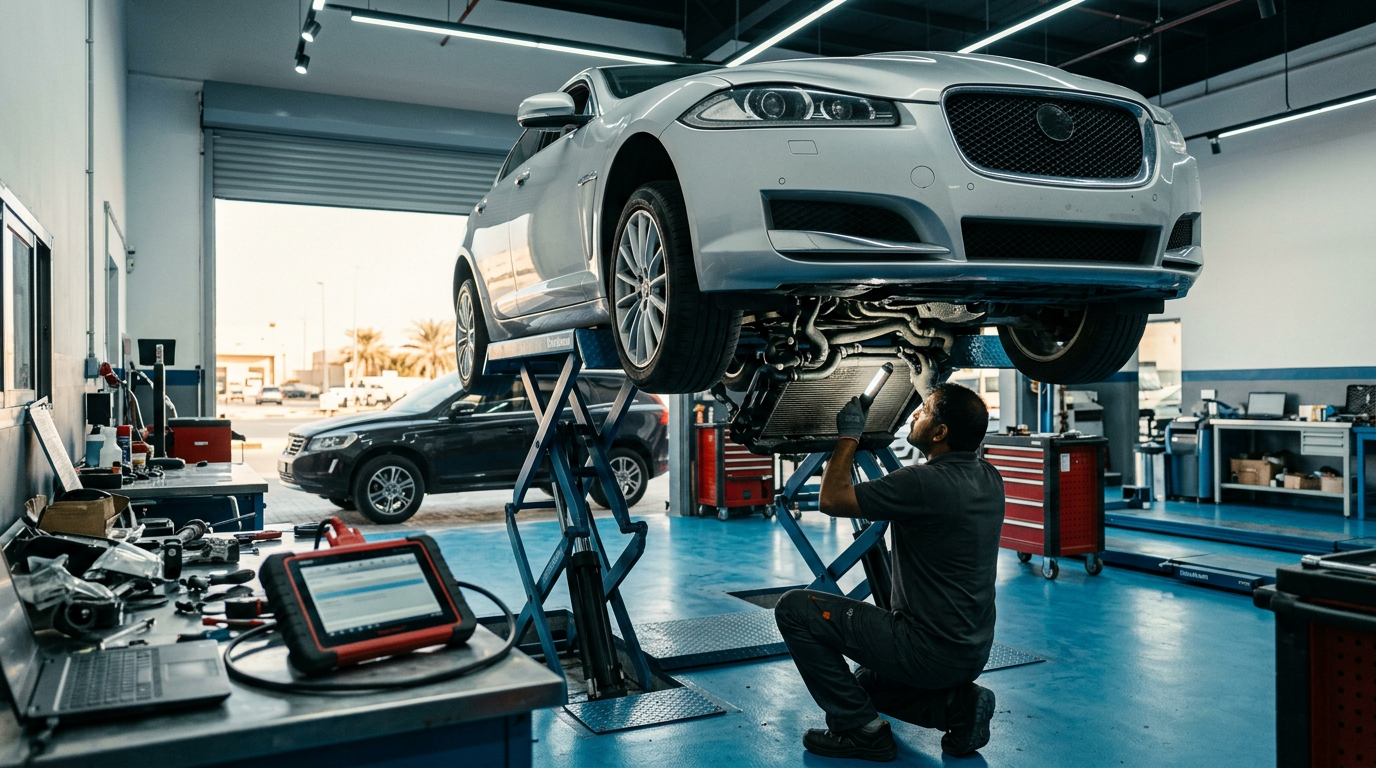
Jaguar maintenance in the UAE requires attention to manufacturer service intervals, heat-related wear on cooling and air conditioning systems, and access to diagnostic equipment that can communicate with Jaguar's complex electronics. Independent specialists with manufacturer-grade tools can deliver the same quality of care as main dealers, often with more flexible scheduling and transparent communication about parts and labour.
Owning a Jaguar in Dubai, Abu Dhabi, Sharjah or elsewhere in the UAE means enjoying exceptional performance and British luxury engineering—but it also means understanding how the local climate and driving conditions affect your maintenance schedule and what services your vehicle genuinely needs.
Jaguar Service Intervals in UAE Conditions
Jaguar's global service schedule typically recommends intervals of 16,000 km or 12 months, whichever comes first. In the UAE, however, most specialists and informed owners treat the environment as 'severe duty' and lean toward shorter intervals—particularly for engine oil, air filters, and brake fluid.
Dubai's summer temperatures regularly exceed 45°C, and tarmac surface temperatures can reach 70°C. This accelerates oil degradation, increases cooling system stress, and causes rubber seals and hoses to age faster. Stop-start traffic in areas like Sheikh Zayed Road and short city trips prevent engines from reaching optimal operating temperature consistently, which can lead to moisture accumulation and incomplete combustion.
Most Jaguar models benefit from oil changes every 10,000 km in UAE conditions, rather than stretching to the maximum interval. Cabin and engine air filters should be inspected every 5,000 km due to fine desert sand, which clogs filter media faster than in temperate climates. Our article on cabin and air filter replacement intervals in dusty climates explains the specific impact of Gulf sand on filtration systems.
Common Jaguar Repairs and Maintenance Needs
Certain systems on Jaguar vehicles require closer attention in the UAE, and recognising early warning signs can prevent expensive failures.
Cooling System and Thermostats
The cooling system works harder here than almost anywhere else. Thermostats, water pumps, radiator hoses, and expansion tanks all experience accelerated wear. Coolant should be tested annually for pH and freeze point (which also indicates boiling point), and hoses should be inspected for softness or cracking. A failing thermostat often causes erratic temperature readings or longer warm-up times, while a weak water pump may produce a whining noise or small leaks from the weep hole. Our guide to coolant leak diagnosis covers how to identify the source of cooling system issues.
Air Conditioning Performance
Jaguar air conditioning systems are sophisticated, with multi-zone climate control and automatic recirculation. In Dubai's heat, the system runs almost constantly from May to October, putting strain on the compressor, condenser, and evaporator. Reduced cooling performance, unusual smells, or intermittent operation usually indicate refrigerant loss, a clogged cabin filter, or a failing compressor clutch. Annual AC service should include refrigerant pressure testing, evaporator cleaning, and cabin filter replacement. Jaguar air conditioning components are shared across some Land Rover models, which can make sourcing quality parts easier.
Suspension and Steering Components
Jaguar's aluminium-intensive construction delivers excellent handling, but the suspension bushings, control arm joints, and steering rack mounts are sensitive to heat cycling and the occasional rough road surface. Clunking over bumps, steering wander, or uneven tyre wear are common symptoms. Many Jaguars use adaptive or air suspension, which adds electronic dampers or air springs that require diagnostic services to pinpoint faults. If you notice bouncing, pulling, or uneven tyre wear, suspension inspection should be a priority.
Brake System Maintenance
Performance models like the F-Type, XFR, and XJR use high-performance brake systems with larger discs and multi-piston calipers. Brake fluid absorbs moisture over time, and in humid coastal areas like Dubai and Abu Dhabi, this happens faster. Moisture lowers the boiling point, which can cause brake fade or spongy pedal feel. Brake fluid should be replaced every two years regardless of mileage. Pads and discs wear at different rates depending on driving style, but inspection every 10,000 km is sensible. Brake services should include calliper cleaning and slider pin lubrication to prevent uneven pad wear.
Electrical and Electronic Systems
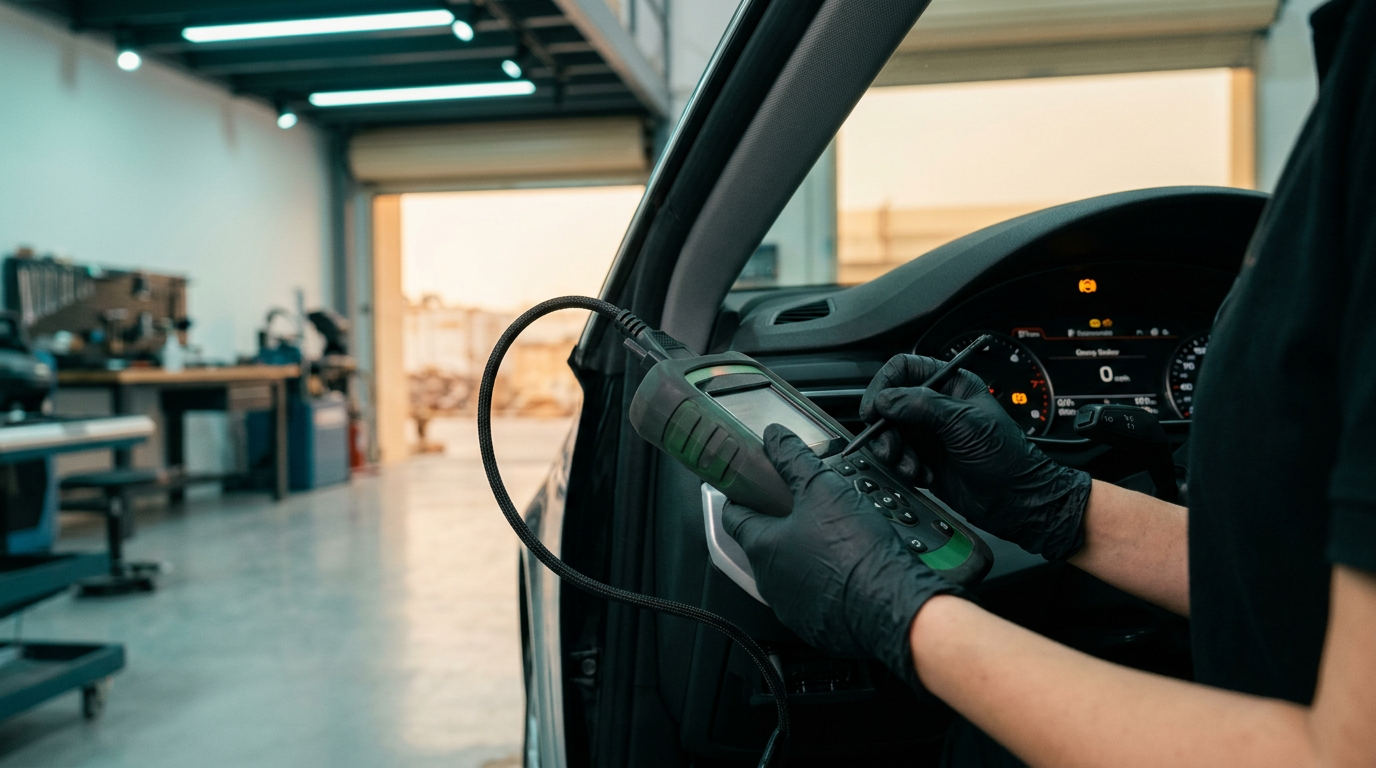
Modern Jaguars are heavily networked, with multiple control modules managing everything from the infotainment system to adaptive cruise control. Battery health is critical—a weak battery causes low voltage that triggers seemingly unrelated faults, from parking sensor errors to transmission warning lights. Battery care in the UAE explains how to extend battery life beyond the typical 18-24 months. Electrical diagnostics require scan tools that can read Jaguar-specific fault codes and perform module programming. Our electrical and electronics service uses manufacturer-grade equipment to accurately diagnose and clear fault codes.
Choosing Between OEM and Alternative Parts
Jaguar uses a mix of in-house components and parts shared with other manufacturers. For example, many electrical components are Bosch or Denso, brakes often come from Brembo or ATE, and some engine management sensors are shared across the wider automotive industry.
OEM (Original Equipment Manufacturer) parts carry the Jaguar part number and packaging but are often made by the same supplier that produces aftermarket equivalents. Premium aftermarket brands like Bosch, Bilstein, Sachs, and Brembo offer parts that meet or exceed original specifications, sometimes at more accessible prices.
For critical systems—engine internals, transmission components, and safety-related electronics—OEM or premium equivalent parts are the sensible choice. For consumables like filters, brake pads, and wiper blades, quality aftermarket options perform reliably. A good independent specialist will discuss parts options transparently and source components that balance quality, availability, and cost.
Where to Service Your Jaguar in the UAE
Jaguar owners in the UAE have several options for maintenance and repair. Main dealers are located in Dubai (Al Tayer Motors in Sheikh Zayed Road), Abu Dhabi, and Sharjah, offering familiarity with the brand and access to the latest technical bulletins.
Independent specialists with European car expertise provide an alternative, often with shorter wait times, more direct communication with the technician working on your car, and transparent explanations of recommended work. The key is ensuring the workshop has genuine diagnostic equipment—generic code readers cannot access Jaguar's proprietary systems or perform module coding and programming.
When evaluating a Jaguar service provider, ask about their diagnostic tools, parts sourcing policy, and whether they maintain service records digitally. For buyers considering a used Jaguar, a pre-purchase inspection by a specialist can identify existing issues and deferred maintenance before you commit.
Typical Maintenance Costs in the Dubai Market
Jaguar maintenance costs in the UAE vary by model, age, and service provider. As a general guide, a minor service (oil, filters, inspection) for a naturally aspirated XF or XJ typically ranges from AED 800 to AED 1,400 across the Dubai market. A major service including brake fluid, spark plugs, and gearbox oil service might range from AED 2,200 to AED 3,800.
Performance models with supercharged engines (XFR, XJR, F-Type V6/V8) cost more due to additional labour time and higher consumable costs—oil capacity alone can be 8-9 litres, and these engines often require fully synthetic high-performance oil.
Repair costs depend on the component. A water pump replacement might range from AED 1,200 to AED 2,000, while a suspension control arm with bushings could be AED 900 to AED 1,600 per side. Air suspension compressor replacement on models like the XJ can range from AED 3,500 to AED 5,500. These are market ranges, not quotes, and actual costs depend on parts choice and labour rates.
For context, our article on Range Rover service costs covers similar maintenance economics for Jaguar's sister brand, and the Maserati ownership costs piece provides a comparison point for other European performance brands.
Booking Service and Keeping Records
Most Jaguar service centres in Dubai, Abu Dhabi, and Sharjah accept bookings by phone or WhatsApp. It's worth providing your VIN (visible at the base of the windscreen or on your registration card) when booking, as this allows the workshop to confirm the exact specification of your car and order any parts in advance.
Keep digital or physical copies of all service invoices, including parts receipts. This documentation supports resale value and helps any future workshop understand your car's history. If you're maintaining a classic Jaguar like an XK or older XJ, detailed records become even more important.
For fleet operators running multiple Jaguars or mixed European brands, fleet services can centralise maintenance scheduling and provide consolidated reporting.
Expert Jaguar Care in Al Quoz
JAD Garage in Al Quoz 4 provides specialist Jaguar maintenance and repair with manufacturer-grade diagnostics, transparent parts sourcing, and over 20 years of European car experience. Call +971 56 355 6113 or visit us Monday to Saturday, 09:00–19:00.
Frequently asked questions