
Why Your Car Pulls to One Side: Alignment vs Brakes vs Tyres

A car pulling to one side while driving is typically caused by incorrect wheel alignment, uneven tyre pressure, a dragging brake caliper, or worn suspension components such as bushings or wheel bearings. Each of these issues creates an imbalance in how force is applied to the front wheels, steering the vehicle left or right without input from the driver.
How to Tell Your Car Is Pulling
Most drivers first notice pulling on a straight, flat road when the steering wheel drifts left or right without turning. The vehicle feels like it wants to veer off course, and you need constant correction to stay in your lane. This is different from a crooked steering wheel (which can sit off-centre even when driving straight) or vibration through the wheel, which points to different problems.
If the pull happens only under braking, the issue is almost certainly brake-related. If it's constant during normal driving, alignment, tyres, or suspension are the more likely culprits.
Wheel Alignment: The Most Common Cause
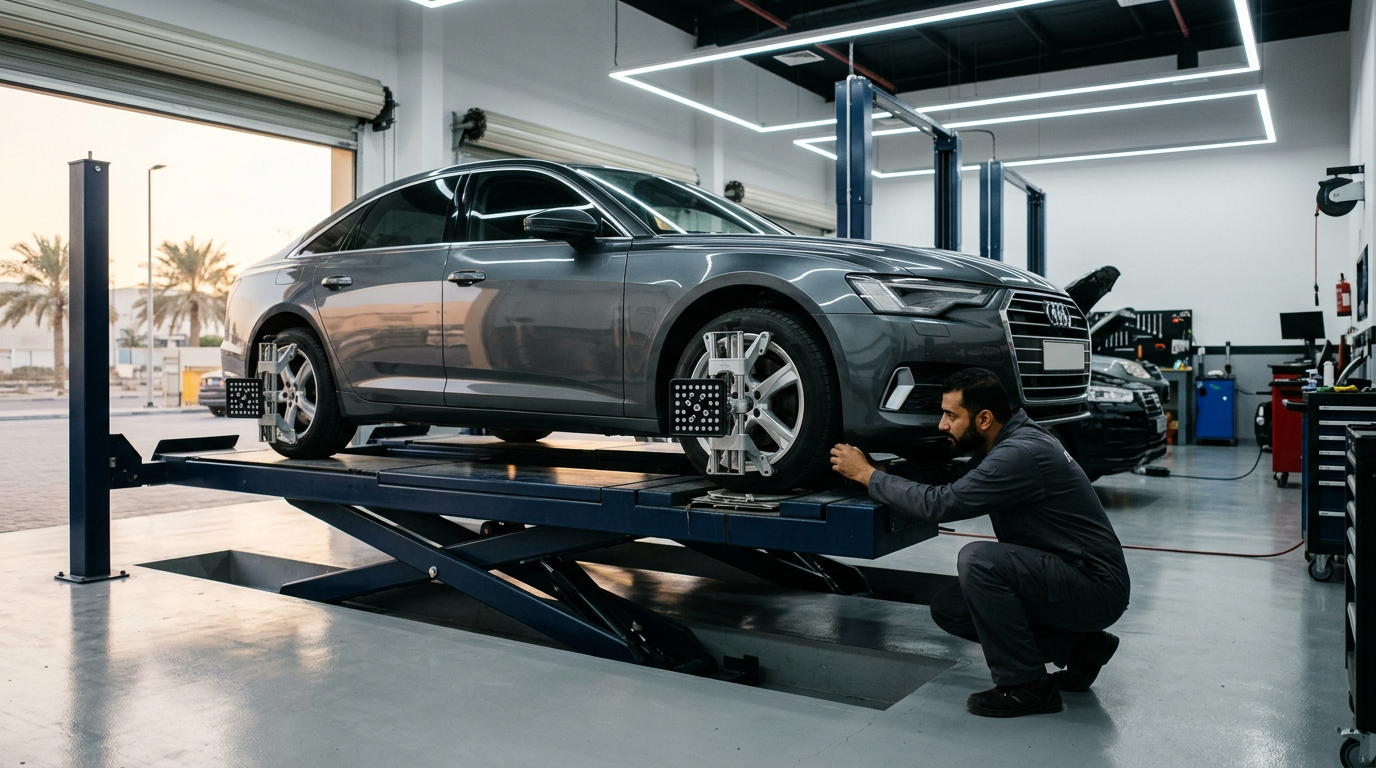
Wheel alignment refers to the angle at which your tyres make contact with the road. Three key angles—camber, caster, and toe—are adjusted to manufacturer specifications during an alignment service. When these angles drift out of spec, the car will pull toward the side with the steeper or more positive caster angle, or the side with more toe-out.
Alignment shifts over time from hitting potholes, speed bumps, or kerbs—all common in Dubai's urban roads and car parks. Even a single hard impact can knock the front suspension out of alignment enough to cause noticeable pulling. Heat expansion and the stress of stop-start traffic can also accelerate wear in suspension bushings, which indirectly affects alignment stability.
A proper suspension and steering inspection will measure all alignment angles using a laser alignment machine. If readings are outside the manufacturer's tolerance (usually within 0.1 to 0.2 degrees), adjustment is needed. Most European and performance vehicles require four-wheel alignment, not just the front axle.
Typical wheel alignment service in Dubai costs between AED 200 and AED 400 depending on whether two or four wheels are adjusted and the type of vehicle. The process takes around 45 minutes to an hour.
Tyre Pressure and Uneven Wear
Uneven tyre pressure is one of the simplest causes of a car pulling to one side, and one of the easiest to check yourself. A tyre that's even 3–5 PSI lower than the opposite side will have a larger contact patch and more rolling resistance, pulling the car toward that side.
Check tyre pressure when the tyres are cold—before driving or at least three hours after your last trip. The correct pressure is listed on the driver's door jamb sticker, not on the tyre sidewall. In Dubai's heat, pressures can rise 4–6 PSI from cold to hot, so always measure before the day warms up.
Uneven tyre wear also causes pulling. If the inside or outside edge of one front tyre is significantly more worn than the other, that tyre's contact patch changes shape and the car drifts toward the worn side. This kind of wear often results from prolonged misalignment, so even if you correct tyre pressure, the pull may remain until the tyres are replaced or rotated.
Inspect tread depth across the full width of each tyre. If one side is 2 mm or more shallower than the other, or if one front tyre is noticeably balder than its partner, that's a red flag. Tyre services include rotation, balancing, and inspection for irregular wear patterns that point to alignment or suspension faults.
For guidance on when tyres should be replaced regardless of tread depth, see our article on tyre replacement intervals in the UAE.
Brake System Issues
If your car pulls to one side only when you press the brake pedal, the problem lies in the brake system. The most common cause is a sticking or dragging brake caliper on one front wheel. The caliper piston fails to retract fully after braking, keeping the brake pad in light contact with the disc. This creates more friction and heat on that wheel, pulling the car toward the dragging side.
You may also notice that wheel is hotter than the others after driving, or that the brake disc has discolouration or scoring. A seized caliper slide pin or a collapsed brake hose can produce the same effect.
Less commonly, uneven brake pad wear or contaminated pads (oil, brake fluid) on one side can cause pulling under braking. If the pull is severe or accompanied by a burning smell, pull over safely and call for assistance—continuing to drive risks brake fade or even fire.
Brake system diagnosis should include a visual inspection of calipers, pads, discs, and hoses, plus a test drive to confirm which wheel is dragging. Typical brake services range from AED 400 to AED 1,200 per axle depending on whether you need pads, discs, calipers, or just caliper servicing and fresh fluid.
For more on brake maintenance in Dubai's climate, read our guide on why brake fluid change intervals matter more in hot weather.
Suspension and Steering Components
Worn or damaged suspension parts can also cause a vehicle to pull to one side. Components to inspect include:
- Control arm bushings: Perished rubber bushings allow the control arm to shift under load, changing wheel alignment dynamically as you drive.
- Wheel bearings: A bad wheel bearing introduces play and friction, pulling the car toward the affected side. You'll often hear a growling or humming noise that changes with speed.
- Tie rod ends and ball joints: Excessive play in the steering linkage lets the wheel wander, creating inconsistent pulling or a loose, vague steering feel.
- Shock absorbers and struts: A failed damper on one side can cause the car to lean or pull, especially over bumps or during lane changes.
Suspension wear accelerates in the UAE due to heat, which hardens rubber bushings, and the fine sand and dust that work into joints and seals. A full suspension inspection on a lift will reveal play, leaks, or damage that isn't visible from the ground.
European performance and luxury brands—BMW, Audi, Mercedes-Benz, Porsche, Range Rover—often use complex multi-link suspension with many bushings and ball joints. Worn parts should be replaced in pairs (left and right) to maintain balance.
For air suspension systems, a leak or failed air spring on one side can lower that corner and alter geometry enough to cause pulling. See our article on Range Rover air suspension failure for symptoms and repair options.
Diagnostic Steps: How to Identify the Cause
Start with the simplest checks first:
- Measure tyre pressure on all four corners when cold. Inflate to the placard specification and test-drive on a straight, level road.
- Inspect tyres for uneven wear, bulges, or damage. Rotate front to rear if wear is uneven but not severe.
- Check if the pull occurs only under braking (brake issue) or all the time (alignment, tyres, or suspension).
- After a drive, carefully feel each wheel hub for excessive heat, which indicates a dragging brake.
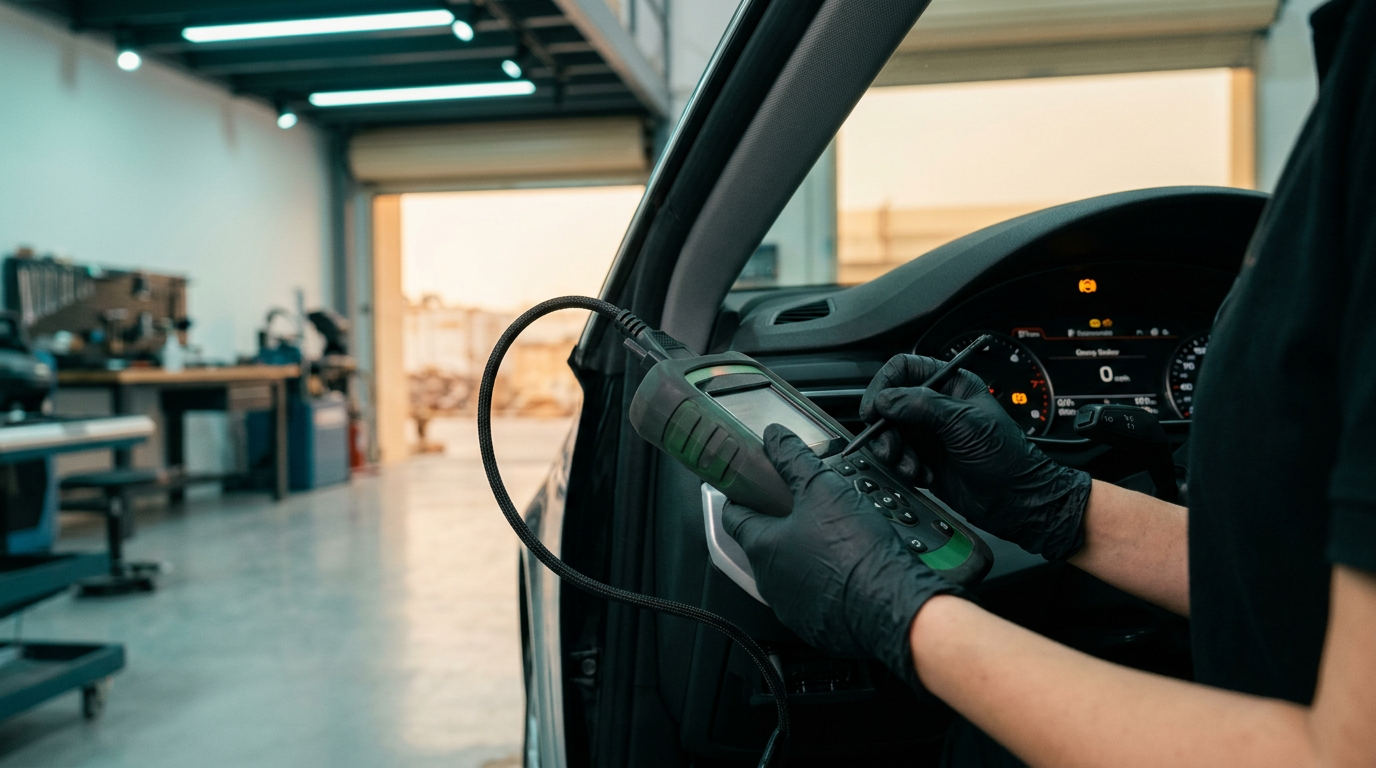
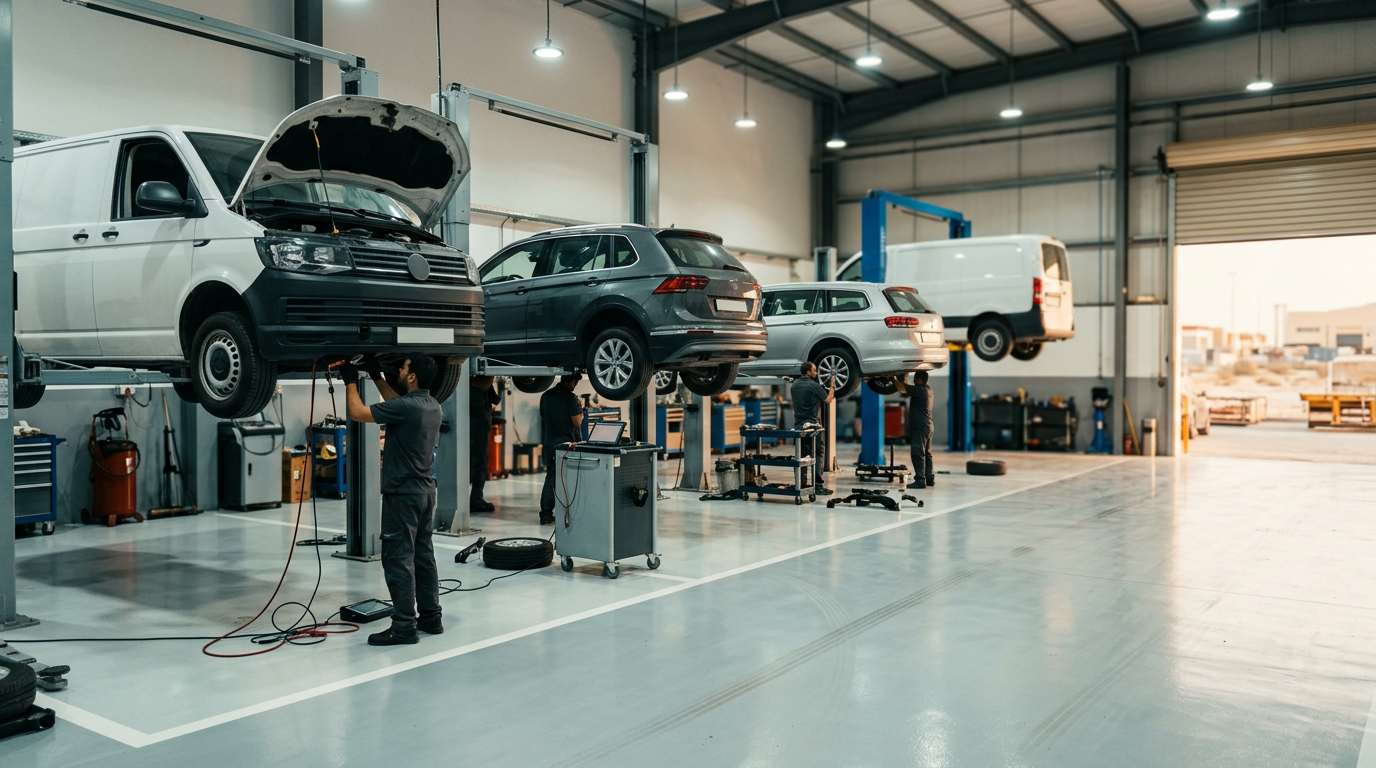
If basic checks don't resolve the pull, a professional inspection is needed. A diagnostic service will include a road test, visual inspection on a lift, alignment measurement, and a check for play in suspension and steering components.
Modern diagnostic equipment can also read wheel speed sensors and ABS data to detect if one wheel is turning at a different rate, which helps pinpoint dragging brakes or a failing wheel bearing.
When to Seek Professional Help
You should book an inspection as soon as you notice consistent pulling, especially if:
- The pull is getting worse over time.
- You've recently hit a pothole, kerb, or speed bump hard.
- The steering wheel is off-centre when driving straight.
- You hear grinding, humming, or clunking noises from the front end.
- One wheel or brake disc is noticeably hotter than the others after driving.
Delaying a fix can accelerate tyre wear, reduce braking performance, and make the car harder to control in an emergency or during a sudden lane change—common scenarios in Dubai traffic.
Independent specialists with manufacturer-grade diagnostic tools can pinpoint the root cause without the markup of a main dealer network. Whether your car is a Volkswagen, Volvo, MINI, Alfa Romeo, or even a Maserati or Lamborghini, the same principles of alignment, tyre balance, brake function, and suspension geometry apply.
Prevention and Maintenance
To minimise the risk of your car pulling to one side:
- Check tyre pressure monthly and before long drives.
- Rotate tyres every 10,000 km or as recommended by the manufacturer.
- Have wheel alignment checked annually or after any suspension work or impact.
- Inspect brake components during routine servicing, especially calipers and slide pins.
- Replace suspension bushings and ball joints at the first sign of play or perishing.
Regular general maintenance keeps all systems in balance and catches wear before it causes noticeable symptoms. In Dubai's conditions—heat, dust, and urban driving—components that would last 80,000 km in Europe may need attention at 60,000 km.
Car Pulling to One Side? We'll Find the Cause
JAD Garage in Al Quoz 4 offers full alignment, brake, suspension and tyre diagnostics using manufacturer-grade equipment. Call +971 56 355 6113 or visit us Monday to Saturday, 09:00–19:00, for an accurate diagnosis and transparent repair options.
Frequently asked questions