UAE Vehicle Inspection Statistics: Pass and Fail Rates


The UAE does not publish aggregate pass/fail percentages for vehicle inspections, but RTA and Dubai Police data from 2019–2023 show that brake defects, tyre condition, lighting faults, and emissions non-compliance account for the majority of inspection failures, with older vehicles (over 5 years) experiencing significantly higher rejection rates than newer passenger cars.
UAE Vehicle Inspection Program Overview
Every vehicle registered in the UAE must undergo periodic safety and emissions testing at RTA-approved testing centres. The motor vehicle inspection program is mandatory for registration renewal and follows a structured schedule based on vehicle age and type.
According to RTA regulations updated in 2023, the inspection intervals are:
- New passenger vehicles: first inspection at 3 years from registration date
- Passenger vehicles 3-5 years old: annual inspection
- Passenger vehicles over 5 years old: annual inspection
- Light commercial vehicles: annual inspection regardless of age
- Heavy duty vehicles (trucks, buses): inspection every 6 months
- Taxis and rental vehicles: inspection every 6 months
The inspection covers approximately 45 checkpoints including brakes, suspension, steering, lights, tyres, emissions, windscreen condition, and chassis integrity. A vehicle that fails inspection receives a rejection report listing specific defects that must be rectified before re-testing within 30 days.
Published UAE Inspection Data
Unlike some jurisdictions in the United States such as New Hampshire, West Virginia, and Texas that publish annual state vehicle inspection statistics, the UAE does not release comprehensive pass/fail percentages. However, targeted data points are available from official sources.
Dubai Police reported in 2021 that tyre-related defects were detected in approximately 18% of vehicles inspected during roadside checks, though this figure represents enforcement stops rather than scheduled testing centre results. RTA published guidance in 2022 noting that brake system faults and lighting defects together represent the most frequent causes of initial test failure.
The UAE Ministry of Energy & Infrastructure stated in 2023 that the national vehicle fleet exceeded 4.1 million registered motor vehicles, with Dubai accounting for roughly 1.8 million passenger cars and light vehicles according to RTA data from the same year.
Common Reasons Vehicles Fail Inspection in Dubai
Workshop observation across Dubai conditions and analysis of rejection reports show consistent patterns. The top reasons cars fail RTA inspection include:
- Brake system defects: worn pads below minimum thickness (typically 3mm), scored discs, brake fluid contamination, or imbalanced braking force between axles
- Tyre condition: tread depth below the legal 1.6mm minimum, sidewall damage, uneven wear, or age-related cracking (the UAE heat accelerates rubber degradation)
- Lighting faults: non-functional headlamps, brake lights, indicators, or incorrect bulb type/colour
- Emissions test failure: CO and HC levels exceeding limits due to worn catalytic converters, oxygen sensor faults, or fuel system issues
- Suspension and steering wear: play in ball joints, worn bushings, leaking shock absorbers
- Windscreen damage: cracks or chips in the driver's primary field of vision
- Fluid leaks: visible oil, coolant, or brake fluid leaks
- Battery and electrical issues: corroded terminals, insufficient voltage, or electrical faults affecting safety systems
Dubai's extreme ambient temperatures reaching 50°C in summer, combined with fine sand ingress and high humidity in coastal areas, accelerate wear on rubber components, batteries, and cooling systems. Stop-start traffic and short urban trips prevent engines from reaching optimal operating temperature, which can affect emissions test performance and carbon buildup.
Pass Rates by Vehicle Age and Type
While official UAE-wide statistics are not published, testing centre patterns observed in Dubai show clear correlations between vehicle age and first-time pass rates.
| Vehicle Age | Observed Pass Rate Pattern | Most Common Failures |
|---|---|---|
| 0-3 years | Very high (minimal failures) | Tyre damage, windscreen chips |
| 3-5 years | High | Brake wear, battery condition, minor lighting faults |
| 5-8 years | Moderate | Brake system, suspension wear, emissions borderline, tyre age |
| 8-12 years | Lower | Emissions failure, suspension/steering play, fluid leaks, corrosion |
| 12+ years | Significantly lower | Multiple system failures, emissions non-compliance, structural corrosion |
Heavy duty vehicles such as trucks and buses operating on commercial schedules show higher failure rates due to intensive use, with brake and tyre wear being the dominant causes. Taxi fleets, despite frequent inspection, often fail on suspension components and brake imbalance due to high mileage accumulation.
European marques including BMW, Mercedes-Benz, Audi, and Land Rover commonly exhibit air suspension faults in older models (for example, Range Rover air suspension failures and Mercedes AIRMATIC issues), which can result in ride height non-compliance.
Emissions Testing Standards in the UAE
The UAE emissions test measures carbon monoxide (CO), hydrocarbons (HC), and in newer diesel vehicles, smoke opacity. Limits vary by model year and fuel type, but typical thresholds for petrol passenger vehicles are CO below 0.5% and HC below 200 ppm at idle for post-2005 models.
Vehicles with malfunctioning catalytic converters, faulty oxygen sensors, or worn spark plugs frequently exceed these limits. The short-trip driving common in Dubai prevents catalytic converters from reaching full operating temperature, which can lead to carbon buildup and borderline readings in older vehicles.
Electric vehicles are exempt from emissions testing but still undergo the full safety inspection covering brakes, tyres, suspension, lighting, and electrical systems. Hybrid vehicles are tested on emissions when the internal combustion engine is active.
How to Prepare Your Vehicle for Inspection
A pre-inspection check by an independent workshop can identify potential failures before the official test. Key preparation steps include:
- Check all exterior and interior lights; replace any non-functional bulbs
- Measure tyre tread depth (must exceed 1.6mm across the full circumference); inspect for sidewall damage or age cracks
- Test brake performance and inspect pad thickness and disc condition
- Verify battery voltage and terminal condition (especially critical given UAE heat effects on batteries)
- Check for visible fluid leaks under the vehicle
- Inspect windscreen for cracks or chips in the swept area
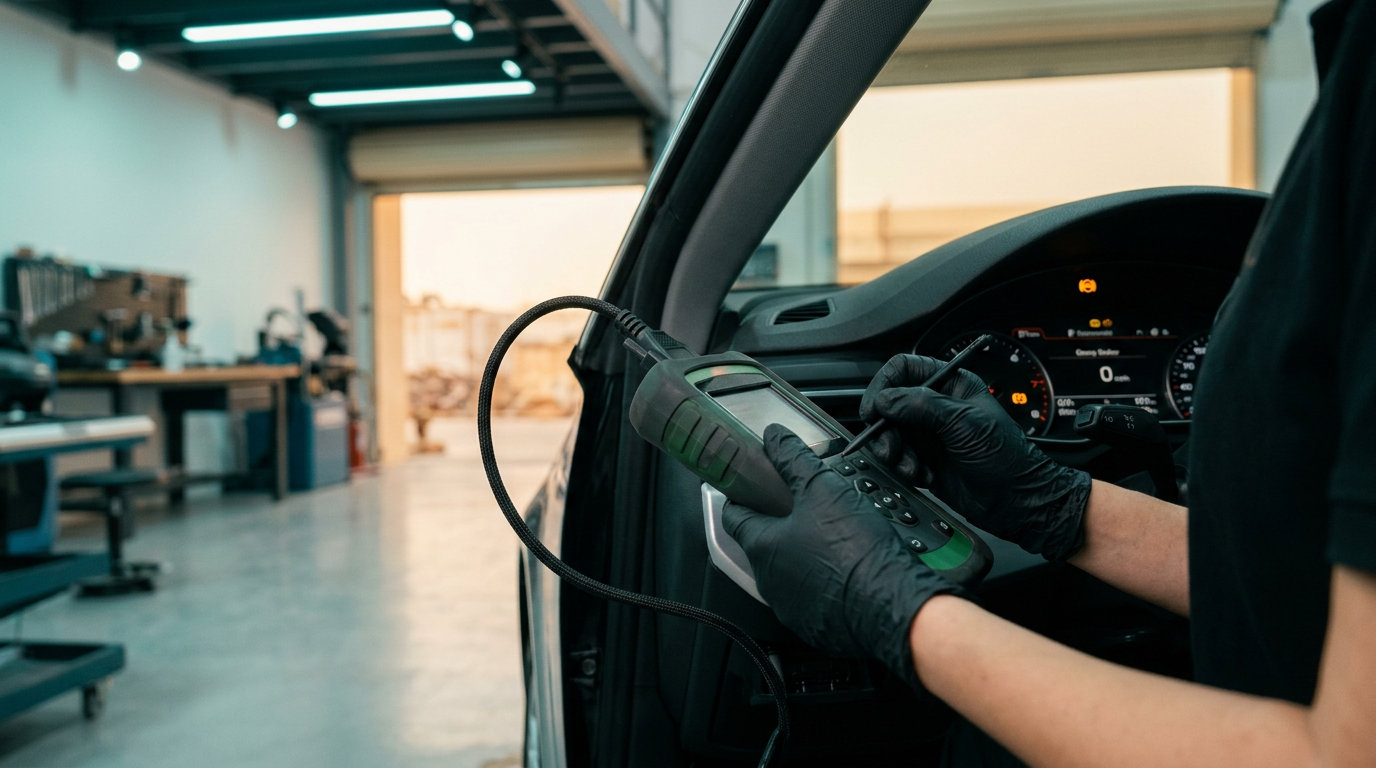
- Run a diagnostic scan to clear any stored fault codes that might affect emissions
- Ensure engine oil and coolant levels are correct
- Test air conditioning function (required for passenger comfort systems check)
For vehicles approaching the test date, a general maintenance service addressing wear items can significantly improve pass probability. European vehicles with complex electronics may benefit from ECU programming updates if manufacturer recalls or software patches are outstanding.
Re-Testing After Failure
If a vehicle fails inspection, the owner receives a detailed rejection report listing each non-compliant item. Repairs must be completed and the vehicle re-presented within 30 days. The re-test fee is lower than the initial inspection cost, but only the previously failed items are re-examined.
Common re-test scenarios include brake pad replacement, tyre renewal, bulb replacement, or emissions system repair. More complex failures involving suspension and steering components or engine management systems require workshop diagnosis and repair before re-submission.
For fleet operators and corporate vehicle managers, scheduling proactive maintenance ahead of inspection due dates minimises downtime and ensures compliance across multiple vehicles.
Comparative Context: Inspection Programs Elsewhere
In the United States, state vehicle inspection programs vary widely. New Hampshire requires annual safety inspections for all registered vehicles, while West Virginia mandates both safety and emissions testing in certain counties. Texas operates a vehicle inspection program combining safety checks with emissions testing in urban areas, publishing annual pass rates that typically range from 85% to 92% for passenger cars.
The UAE system resembles comprehensive safety inspection models but with stricter initial intervals for newer vehicles and more frequent testing for commercial and heavy duty vehicles. The lack of publicly available aggregate statistics makes direct comparison difficult, but anecdotal evidence from multi-national fleet operators suggests UAE pass rates for well-maintained passenger vehicles are comparable to international benchmarks.
The Role of Preventive Maintenance
Regular servicing significantly reduces the likelihood of inspection failure. Vehicles maintained according to manufacturer schedules—including transmission servicing, brake fluid changes, and tyre rotation—typically pass on the first attempt.
For high-performance and luxury marques such as Porsche, Ferrari, Lamborghini, Maserati, and Bentley, proactive component replacement and diagnostic monitoring prevent unexpected failures. Similarly, sports car and supercar maintenance programs tailored to Dubai conditions address the accelerated wear caused by heat and dust.
Classic and collector vehicles also require special attention; classic car maintenance often involves sourcing period-correct components that meet modern safety standards, and older vehicles may need bodywork and paint attention to pass structural integrity checks.
Pre-Inspection Check Before Your RTA Test
Avoid rejection and lost time with a comprehensive pre-test inspection at JAD Garage in Al Quoz 4. We check all RTA test points and address wear items on European and EV models. Call +971 56 355 6113 to book.
Frequently asked questions